

Why Creativity, in its Deepest Sense, is the Missing Key to Our Future
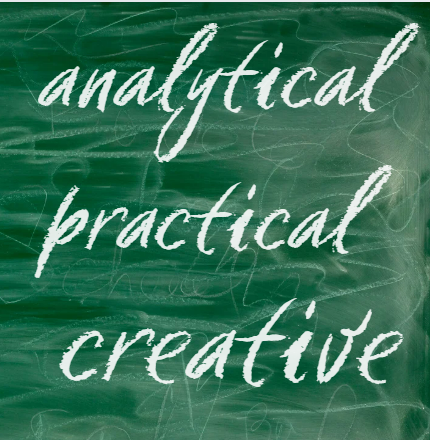
Creative intelligence, as described by psychologist Robert Sternberg, is one of three core forms of intelligence.
Analytical and practical intelligence are widely recognised. They shape how we educate, assess, train, and hire. We see them reflected in school timetables, university degrees, and the kinds of skills that are rewarded in many professional settings. But creative intelligence – the third – has long been misunderstood. It’s often seen as something rare, reserved for the naturally talented or the artistic few. It’s barely nurtured in mainstream education, and it’s almost never treated as essential in business or leadership.
Yet in the world we live in now, it may be the most vital form of intelligence we have.
We’re No Longer Living in the Age of Certainty
Since the pandemic, and with the rapid acceleration of AI, automation, and global disruption, we’ve been moving into a new kind of world, one that requires a very different way of thinking. Many of the systems we once relied on feel outdated or unfit for purpose. And many of the skills we were told to value no longer feel relevant.
What the world needs now isn’t more polished professionals or higher test scores. It needs people who are able to sit with ambiguity, navigate complexity, trust themselves in the face of uncertainty, and respond in ways that feel both creative and human.
This is where creative intelligence comes in. And not just in terms of having ideas or being imaginative but in developing the inner capacities to adapt, to discern, to act with clarity, and to stay connected to something meaningful whilst everything around us is shifting.
Jung Understood This Decades Ago
Carl Jung didn’t view creativity as something decorative or optional. He saw it as fundamental to psychological growth; a necessary part of becoming whole. For Jung, creativity wasn’t a skill but a process, a force, an instinct. Something that arises when the conscious and unconscious meet, and when we stop trying to control or avoid the unknown.
He spoke often about the union of opposites and saw creative work as a way to hold tension between the rational and the emotional, the structured and the intuitive, the known and the unknown. It is this tension, not resolution, that leads to transformation.
He also recognised the four functions of the psyche – thinking, feeling, sensation, and intuition – and believed that for any of us to develop in a meaningful way, we need all of these alive and in dialogue with each other.
Creative intelligence lives right at that intersection. And it’s something we can all access, not just in theory, but through our bodies, our practices, and the choices we make every day.
Education is Still Operating Like It’s 1950
Despite everything we now know, many education systems continue to prepare students for a world that no longer exists. The emphasis is still on standardisation, measurable outcomes, and content delivery. Students are taught to absorb information and produce results, but rarely encouraged to develop their creative intelligence; their capacity to think, feel, and respond with originality and insight.
Creative subjects are often marginalised or treated as less important. And even when creative thinking is encouraged, it’s often boxed into tight criteria that make it hard to take risks or explore something unexpected.
The same dynamics show up in many professional environments. There’s pressure to perform, to be efficient, to prove value, but very little space for reflection, intuition, or original thought. And very little patience for uncertainty.
We are still relying on systems that were built for the Industrial Age. But we’re not in that age anymore.
We’re Born With Creative Intelligence – We Just Learn to Hide it
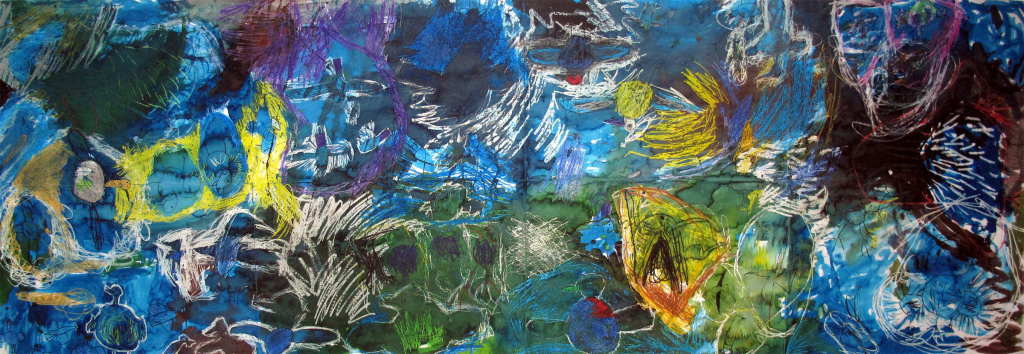
Artwork created outside by a group of 5 year olds in response to collected natural forms. Approx 5m x 1.5m.
Over the last thirty years of teaching, mentoring and working with people of all ages, I’ve seen how creativity gets pushed down. Children start off naturally imaginative, curious, and responsive to the world around them, but by the time they’re in their teens, many have learned to second-guess themselves. They start asking what’s allowed, what’s expected, what will get the right grade.
The same happens in adulthood. People stop trusting their instincts, they rely on routines, and they doubt the part of themselves that wants to do things differently.
But creative intelligence never disappears, it just gets buried beneath rules, fear, pressure, and the belief that there’s only one right way.
When people reconnect with it, the shift is tangible. They become more open, more courageous, more intuitive, and more alive in their work. They start to see the possibility in places they once felt stuck.
This reconnection is what sits at the heart of Art-Ed Hub.
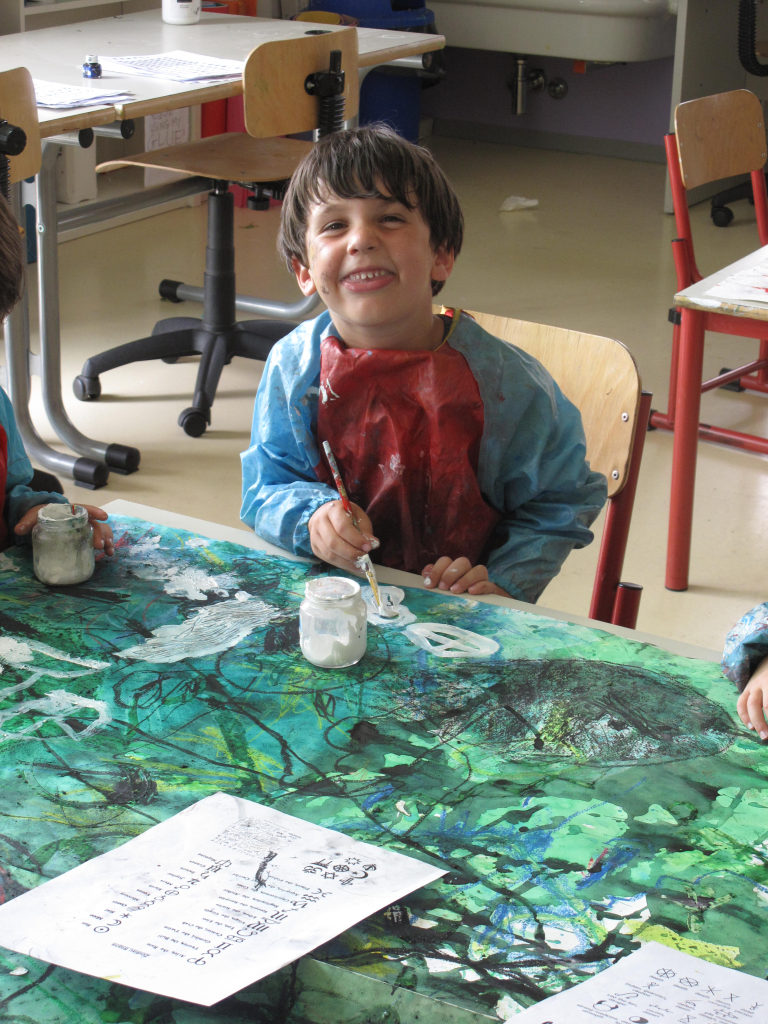
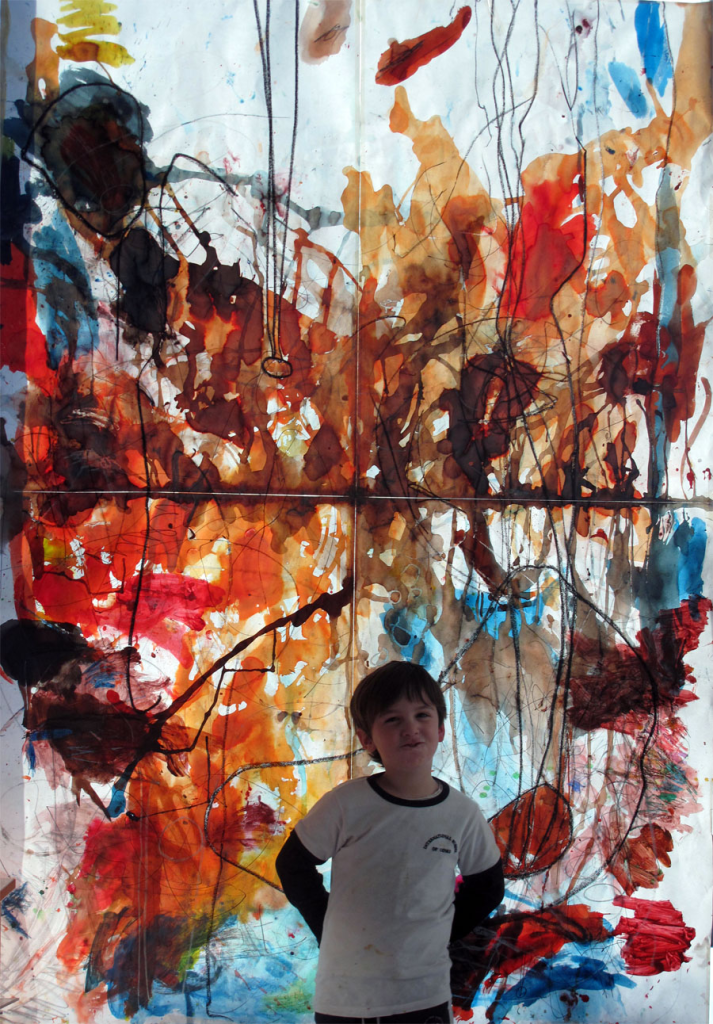
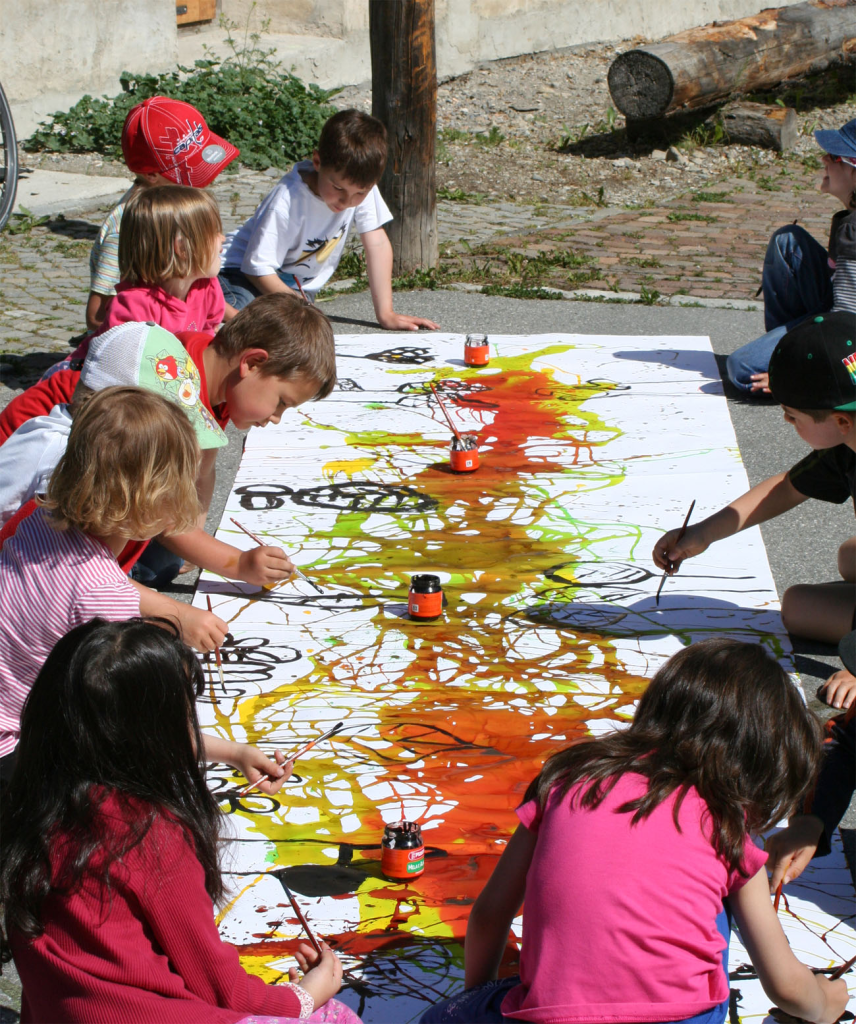
Working with young children was quietly life-changing. Each one responded to the materials, surfaces, and scale with such honesty and freedom; completely unfiltered. There was no hesitation, no self-censorship.
A Framework for Creative Awakening: Disrupt. Discern. Deliver.
Inside the Business Hub, I’ve developed a structure that helps individuals and teams engage more deeply with their creative intelligence. It’s not a linear model, but a cycle, and one that reflects both Jungian principles and real-world transformation.


This is where we interrupt patterns; the ones we’ve inherited, the ones we’ve internalised, and the ones we’ve never thought to question.
It means making room for uncertainty, stepping away from perfectionism, and being willing to take creative risks. It embraces creative flexibility, playfulness, and the capacity to generate new ideas in the face of complexity or constraint. It’s where systems begin to shift.
This is often uncomfortable. But it’s where possibility begins.
Next, we learn to listen; to ourselves, to each other, and to what’s trying to emerge.
This stage is about noticing what’s really going on beneath the surface. It involves tuning into all four functions: not just thinking through something, but feeling into it, sensing how it sits in the body, and allowing space for intuition to speak. This is where a lot of people begin to realise how much they’ve been overriding their own insight, and how powerful it is to return to it.
Finally, we move towards action but not for the sake of completion or productivity.
This is about bringing something real into the world. It might be an idea, a project, a decision, or a shift in approach.
Whatever it is, it’s anchored in self-awareness and shaped by integrity.What we’re delivering is not just the outcome, but the process; the presence, the mindset, the courage it took to get there.
This is the Work of the Creator
When I use the word “creator,” I don’t mean influencer or content producer. I mean someone who is consciously shaping their path, someone who can hold complexity, move with integrity, and listen deeply to what’s needed, both within and around them.
Creators are not fearless, but they act anyway. They disrupt when something no longer feels true, they discern what matters, and they follow through; not because they’re sure, but because they’re committed.
That’s what this work supports.
Not just creativity as a concept, but creative intelligence as a way of being.
A Place to Begin
If something in this resonates, even if it’s just a quiet sense that there’s more of you waiting to be expressed, you’re not alone.
I’ve created a free Creative Intelligence ScoreCard to help you get started. It takes just a few minutes to complete and offers insight into where you are right now, and where there may be space to grow.
If you’re part of a school, organisation or team, and want to explore how the workshops might support your community, I’d love to have that conversation with you.
We don’t need more certainty. We do need more people who are willing to stay awake, to themselves, to each other, and to what’s possible when we stop following scripts and start listening again.
That’s where creativity begins.
And where change becomes real.